DROPS by SoleSavy - Sneakers
- 4.0
- Rating
- 10.00K
- Installs
- Free
- Price

 Analysis by App-foxy
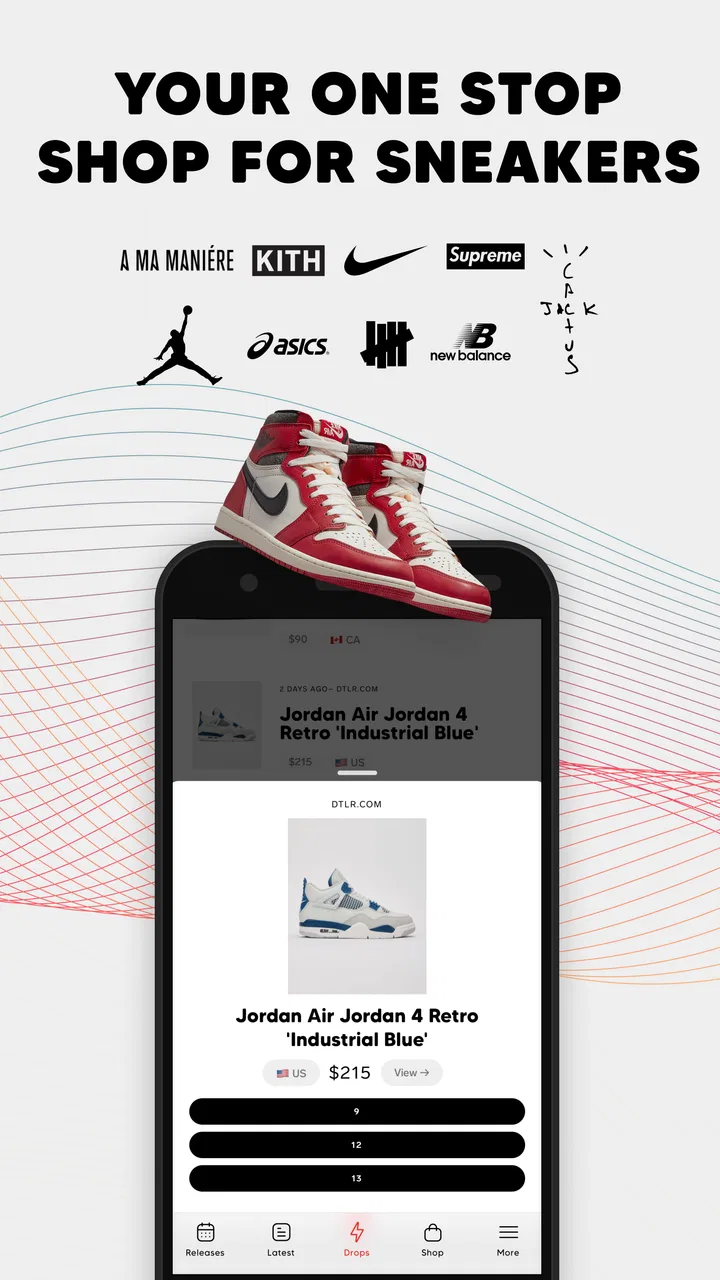
If you buy sneakers around release dates, you already know the difficult part is often not choosing a pair. It is finding out that the pair is available before the moment has passed. DROPS by SoleSavy is a free shopping app built around that problem, bringing release news, restock information, instant drop alerts, and free raffles into one place. I found its value less in browsing shoes casually and more in reducing the amount of checking I would normally have to do myself.
The app is made by SoleSavy and sits firmly in the sneaker-shopping category rather than trying to be a general marketplace. That focus matters. It is aimed at people who follow launches, limited availability, and sudden restocks, not someone who simply wants to search for everyday footwear and compare ordinary retail options. After using it, my view is that the app works best as an early-warning tool: it helps you organize attention around opportunities, while the actual purchase decision still requires patience and a clear budget.
What I would consider before installing it
My first decision criterion is how often you care about timing. If you buy sneakers only when you happen to walk past them in a store, alerts and release coverage may feel like unnecessary noise. If you have ever missed a restock because you checked too late, the app makes more sense. Its central promise is not that every desired pair will become easy to buy; it is that important events are easier to notice.
You May Also Like

 AccuWeather: Weather Radar
AccuWeather Review: A Quick, Clear Forecast for Everyday Decisions
For everyday plans, the best forecast is the one you can understand quickly. AccuWeather makes rain timing, radar, and local conditions easy to act on, with a few trade-offs.

 Hill Climb Racing
Why Hill Climb Racing Still Turns Crashes Into One More Run
A tiny car, a bumpy hill and one more upgrade: Hill Climb Racing keeps resurfacing because its simple chaos makes every near-miss feel personal.

 AliExpress - Shopping App
AliExpress Makes Global Shopping Feel Personal, but Shoppers Bear the Risk
AliExpress turns a global marketplace into a pocket-sized discovery engine. Its reach is useful, its shopping loop compelling, and its trade-offs easy to miss.

 Lords Mobile: Kingdom Wars
Lords Mobile Is a Kingdom-Building Routine, Not a Quick Match
A case-by-case verdict on the building, battles, device demands, and social commitments that make Lords Mobile rewarding for some players and exhausting for others.

 PDF Scanner app - TapScanner
TapScanner Makes Paperwork Easier to Capture, Check, and Share
TapScanner makes scanning with a phone feel less like a rescue operation and more like a dependable step in getting work done. Its capture tools are useful, though not flawless.

 Block Blast!
 Shows How Much a Puzzle Game Can Leave Out
A quiet grid game shows why puzzle players increasingly value instant clarity, repeatable skill and low-pressure play—and where the genre still needs to catch up.
More From Our News Desk
View All News


The second question is whether you want a focused sneaker feed or a broad shopping app. DROPS by SoleSavy is clearly designed for the former. The store summary emphasizes free raffles, drop alerts, restocks, releases, and news, so I approached it as a monitoring companion rather than a full replacement for every retailer or brand app. That distinction prevents disappointment: it can help you discover and track moments, but it does not remove the competition, checkout friction, or availability limits that come with sought-after sneakers.
There is also a useful difference between information and action. A release notice may tell me that I should pay attention, while a raffle gives me a chance to enter. Those are not the same outcome. I still need to read the details carefully, decide whether the shoe is worth pursuing, and use the appropriate buying route. The app is strongest when I treat it as a decision layer over the sneaker market, not as a guarantee of access.
On the practical side, it is free to install, and the content rating is Everyone, which makes it approachable for a wide audience. The app has an average rating of 4.0 from around 182 ratings, with about 54 written reviews. I would read that as encouraging but not definitive: there is enough user feedback to suggest a real audience, yet not enough to assume every workflow will suit every phone or shopping habit.
How I would set up a useful routine
The biggest mistake would be opening the app once, scrolling through a few entries, and expecting it to solve sneaker shopping automatically. I would instead use it at two different times. During a normal week, I would check the release and news areas briefly to understand what is coming. When I am actively waiting for a particular pair, I would pay closer attention to drop alerts and restock notices instead of treating the entire feed as equally urgent.
This two-level routine is one of the more important practical insights. Constantly watching every update can make the app feel overwhelming, especially if your interests are broad. A short planning check helps separate “interesting” from “worth acting on.” Then, when a target release approaches, the alert function becomes more valuable because I already know what I am looking for and what price or style would make me walk away.
I would also keep a simple external note with the models I genuinely want, the maximum I am willing to spend, and the sizes that matter. That is not a missing feature; it is a sensible companion habit. Release feeds can encourage impulse decisions, and a written limit gives me something firm to consult when a restock appears unexpectedly. The app helps me notice the opportunity, while my own note protects me from turning every alert into a purchase attempt.
Where the app feels most useful
The clearest strength is concentration. Instead of visiting several brand pages, retailer sections, and sneaker-news sources just to discover what might happen next, I can start with a focused stream from a developer that specializes in this subject. Even when I still need to confirm the final buying details elsewhere, that first layer saves mental effort.
Free raffles are another meaningful part of the experience. For a shopper who dislikes paying for access before even having a chance to buy, a free entry route is easier to consider. I would still read each raffle carefully and avoid assuming that entry equals success. The useful trade-off is that the app can surface opportunities I might otherwise overlook, but I remain responsible for checking eligibility, timing, and any instructions attached to the individual event.
Restock alerts are especially practical for people who do not want to participate in every launch conversation. A release can sell out while someone is at work, commuting, or simply offline. A later restock may be a better fit for real life than trying to compete at the original moment. In that situation, the app changes the task from repeatedly refreshing pages to waiting for a more relevant signal.
News also has a quieter benefit. It gives context to the alerts, which can help me decide whether something deserves attention or is merely passing chatter. I do not need to react to every headline. I can use the news side to understand why a release matters, then use alerts and raffles for concrete action. Separating those roles makes the experience less frantic and more useful.
A realistic everyday example
Imagine I want one particular sneaker but cannot spend the day watching release pages. In the morning, I open the app and scan upcoming releases and related news. I make a note of the pair and my spending limit, then leave the app alone while I work. Later, an alert points me toward a restock or raffle. I can assess the opportunity with a prepared decision instead of buying simply because the notification created urgency.
If the pair is available through a route I trust and the total cost fits my limit, I continue to the relevant purchase process. If it does not, I skip it without feeling that I have lost control. This is where the app earns its place for me: it compresses discovery and timing into a manageable routine, but it does not pretend that a notification can replace judgment.
How it compares with other ways to track sneakers
The usual alternative is to follow individual retailer and brand apps. That approach may be better when I already know exactly where I prefer to buy, because I can stay close to the source and handle the purchase in a familiar environment. The downside is fragmentation. I have to remember which source covers which release, and a restock can appear somewhere I was not checking.
A broad shopping marketplace is more useful when my priority is immediate product search, used pairs, ordinary availability, or price comparison across many sellers. DROPS by SoleSavy is not the same kind of tool. Its advantage is timing and discovery around sneaker drops, while a marketplace may be better once I have a specific model and want to compare actual listings. I would happily use both, because they solve different stages of the process.
Social media can provide fast information, but it also mixes reliable leads with speculation, repeated posts, and attention-grabbing rumors. The app’s focused format is easier for me to use when I want a shopping action rather than an endless conversation. Still, I would not abandon official purchase channels or independently check important details. A focused alert is helpful; it should not be treated as the final authority for every condition of a sale.
Dedicated sneaker communities may be a better choice for someone who wants discussion, opinions, collecting advice, and personal recommendations. DROPS by SoleSavy feels more practical than conversational. I would choose the app when my question is “What should I watch right now?” and a community when my question is “Is this pair worth owning, and what do experienced buyers think?” That is a meaningful distinction for new collectors.
Where another option may fit better
I would skip this app if I rarely buy limited or release-driven sneakers. Someone shopping for basic trainers, children’s shoes, or a dependable pair for daily walking may get more value from a retailer with straightforward filters and stock information. The alert-and-drop model is most useful when timing affects the purchase.
I would also look elsewhere if I want the entire transaction to happen inside one shopping environment. This app’s purpose is to gather opportunities and updates, not to make every retailer, payment step, delivery option, and return decision feel like one unified store. For a shopper who values a single familiar checkout above discovery, a preferred retailer’s own app may be less distracting.
There is a similar trade-off for people who dislike notifications. Alerts are only useful if they arrive at a time when I can act, and too many updates can make important ones easier to ignore. My solution would be selective attention: use the app as a planned check-in tool and keep notifications focused on the releases or restocks that genuinely matter. If I know I will never respond to alerts, the app’s main advantage largely disappears.
Costs, upgrades, and the effort of switching
The free entry point makes experimentation easy. I can install it, learn whether its release coverage matches my interests, and decide whether its rhythm suits me without paying first. That is particularly helpful for occasional buyers who are curious but not ready to commit to a sneaker-focused service.
There are in-app purchases ranging from $11.99 to $59.99 per item. I would treat those as an optional commitment rather than part of the basic reason to try the app. Before paying for anything, I would ask whether the added value improves a real problem in my routine: missing important opportunities, needing more focused access, or wanting a deeper level of involvement. If I only check releases occasionally, the free experience may be enough.
The switching cost is mostly behavioral rather than financial. Once I rely on one place for drop awareness, I may need to adjust how I verify details and where I complete purchases. I would not delete retailer apps immediately. Instead, I would use DROPS by SoleSavy as the discovery layer for a while, compare its usefulness with my existing sources, and keep the channels that add genuinely different value. That gradual approach avoids losing a trusted purchase route while I learn the app.
Compatibility is also straightforward for many older devices: the app requires Android 7.0 or later. Its current version is 2.2.2, and the application has passed the early stage of being a brand-new release, having first appeared on March 30, 2020. For me, that makes it reasonable to test on a compatible older Android phone, although everyday comfort will still depend on the device and how actively I use alerts.
Who gets the most from it
I would recommend it to a sneaker buyer who follows release calendars, wants a second chance through restocks, or is tired of discovering raffles after they close. It is also a good fit for someone who wants a single focused starting point without spending the day checking scattered sources. The app is particularly useful when I have a short list of targets and can turn notifications into a deliberate plan.
Newer sneaker shoppers may appreciate the concentration of information, but I would encourage them to slow down. The app can make the market feel active and urgent, which is not always the same as making a good purchase. Start with one or two models, learn the timing, and decide what you actually want before entering every opportunity. That approach turns the app into a learning aid instead of an impulse engine.
Experienced collectors may find it useful as a supplement rather than a complete system. If I already have trusted sources, I would compare the app’s alerts and news with them rather than expecting it to replace everything. Its value is highest when it catches something my current routine misses or makes the monitoring process less scattered.
My recommendation after using it
My recommendation is to try DROPS by SoleSavy if sneaker timing is part of your shopping life. The free access, focused release coverage, raffle discovery, and restock awareness give it a clear purpose. I like it most as a calm planning tool: check what is coming, identify what matters, wait for a useful alert, and then make a purchase decision with a limit already in mind.
I would not recommend treating it as a magic route to sold-out sneakers, a substitute for every retailer, or a reason to pay for extras before understanding your own needs. The app cannot make scarcity disappear, and its usefulness depends heavily on whether you will act on the information it surfaces. For ordinary footwear shopping, a standard retailer or marketplace may be simpler. For release-focused sneaker shopping, however, this is a sensible addition to the routine.
With over 10 thousand installs, it has found a real audience, though its user base is still specialized rather than universal. That matches my experience: this is not an app I would keep open all day for entertainment. I would keep it available because it gives a focused answer to a specific problem—staying aware of sneaker drops and second chances without manually checking every source.
FAQs for DROPS by SoleSavy - Sneakers
01What is DROPS by SoleSavy - Sneakers?
DROPS by SoleSavy - Sneakers is an app designed for sneaker fans who want a more organized way to follow upcoming releases, limited launches, restocks, and notable updates. It brings release information into one place and can help users keep track of dates, brands, models, and purchasing opportunities. It is especially useful for people who regularly monitor popular or hard-to-find sneakers.
02Can I buy sneakers directly through DROPS by SoleSavy - Sneakers?
The app primarily functions as a sneaker release and discovery tool rather than a traditional online shoe store. Depending on the release, it may direct you toward an official retailer, brand website, or another purchase channel. Availability, pricing, sizes, shipping, and return policies are controlled by the retailer, so users should review those details carefully before completing a purchase.
03Does the app provide reliable sneaker release dates and notifications?
DROPS by SoleSavy - Sneakers is intended to help users follow release schedules and stay informed about important sneaker drops. However, release dates, launch times, stock levels, and retailer details can change without warning. Notifications are helpful for reminders, but they should not be treated as a guarantee that a product will be available or that every launch will occur exactly as listed.
04Is DROPS by SoleSavy - Sneakers free to download and use?
The app may be available to download without an upfront charge, but users should check its current App Store or Google Play listing for the latest information about subscriptions, optional purchases, or premium features. Some services connected to sneaker communities or exclusive content can have separate requirements. Always review the pricing information and in-app purchase terms before signing up.
05Is DROPS by SoleSavy - Sneakers suitable for beginners and experienced sneaker collectors?
Yes, the app can be useful for both newcomers and experienced collectors. Beginners may appreciate having release information and sneaker discoveries presented in a more accessible format, while experienced users can use it to monitor launches and plan ahead. Still, users should independently verify authenticity, retailer reputation, final prices, and purchase conditions before buying any pair through an external seller.
Pros
- Useful sneaker release alerts help users track upcoming launches.
- Community features make it easier to share tips with other sneaker enthusiasts.
- Curated content can help newcomers understand sneaker culture and trends.
- Multiple brand and model discussions offer a broad range of interests.
- The app can complement a resale strategy with timely market conversations.
Cons
- Some features may require a paid SoleSavy membership or subscription.
- Release information may vary in accuracy across brands and regions.
- The sneaker-focused content may feel repetitive for casual shoppers.
- Community advice should be verified before making expensive purchases.
- The app may use notifications frequently unless alert settings are adjusted.

DROPS by SoleSavy - Sneakers
Gallery